Asheville Water Damage Cleanup and Repair, Close to Home
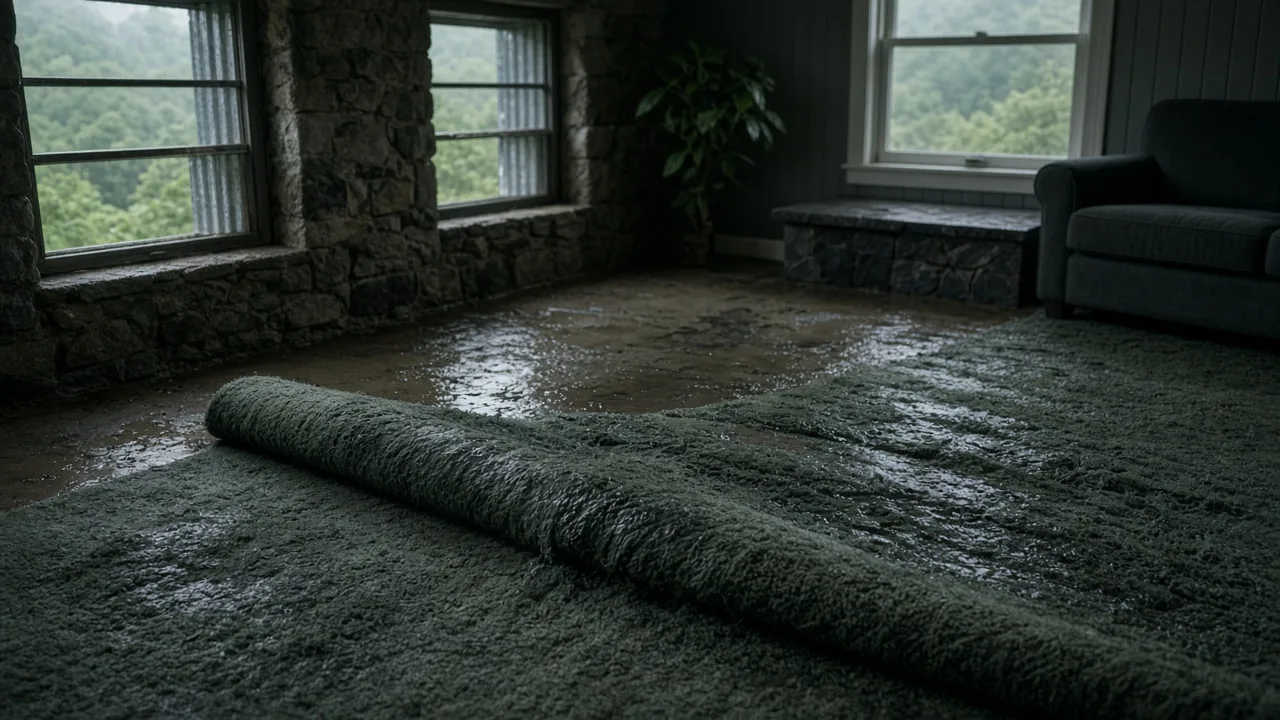
Asheville water damage comes from every direction: rivers that rise past their banks, trees that fall through roofs, pipes that split in an unheated crawl space, and the ordinary failed water heater. Our team extracts the water, dries the house properly and rebuilds what had to come out.
If water is still coming in, call (828) 555-0115 and we'll help you stop it.
Prefer to talk? (828) 555-0115
- Water extraction
- Moisture mapping
- Structural drying
- Repairs and rebuild
Water damage help in Asheville
Storm Damage
Wind and falling trees can open an Asheville roof in seconds; rain does the rest. We tarp, remove wet materials, dry the house and rebuild. Call Us now.
Learn moreFlood Cleanup
River or creek water inside an Asheville home leaves mud and contamination behind. We muck out, remove ruined materials, disinfect and dry. Call Us today.
Learn moreFrozen Pipes
A pipe split in the crawl space or an exterior wall during an Asheville cold snap? We stop the water, extract it and dry the house out. Call our crew.
Learn more
The Week the Rivers Broke Their Records
On September 27, 2024, the USGS gauge on the French Broad River at Asheville recorded a provisional peak of 24.67 feet. The previous record, 23.10 feet, had stood since the flood of July 1916, and that gauge has records going back to 1895. On the Swannanoa River at Biltmore Village, the National Weather Service logged a crest of 27.33 feet, far above the 1916 mark of 20.7.
The National Hurricane Center's report on Helene describes lower-lying buildings in historic Biltmore Village inundated with deep water or swept away, and much of the River Arts District along the French Broad destroyed. Rain from a separate system in the days before Helene had already saturated the ground.
Cold Snaps on the Water System
Freezes matter here too. Over Christmas 2022, during the coldest weather the city had seen since January 2014, the system recorded 27 water main breaks, and an independent review listed on-premise leaks and breaks from the cold among the causes of the demand that followed. Thousands of customers in the south and west lost service.
Older Houses on Steep Lots
The Census Bureau's 2024 estimate puts the median build year of Asheville's homes at 1984, but the older end runs deep: nearly one home in five predates 1940. Older framing, plaster and wood floors need slower drying. And on a sloped lot, water from a storm, a gutter or a broken line tends to collect on the downhill side or under the house.
What We Do, In Order
- Make the house safe: source stopped, power to wet areas off.
- Extract standing water, including from crawl spaces and basements.
- Trace hidden moisture using meters and an infrared camera.
- Remove materials that can't be saved, especially after muddy floodwater.
- Set dehumidifiers and air movers, and record readings every day.
- Rebuild floors, walls and trim.
When the Power Is Out Too
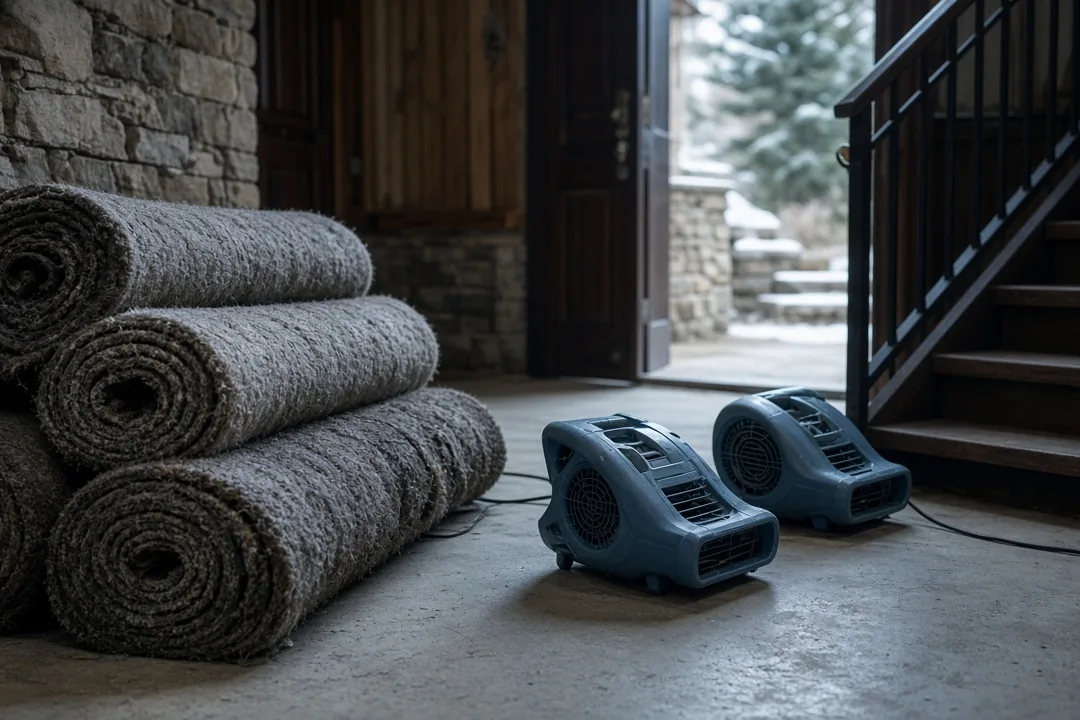
After Helene, the National Weather Service noted that most people in the region went at least a couple of days without electricity. With no power, sump pumps and fans stop and drying stalls. In the meantime, pull wet rugs and cushions out of the house, open windows when the air outside is drier than inside, and photograph every room before you move anything.
Choose Your Problem
- Flood cleanup in Asheville, for river, creek and runoff water.
- Storm damage repair for Asheville homes, for roofs opened by wind and falling trees.
- Frozen pipes in Asheville, for splits in crawl spaces, exterior walls and attics.
Asheville Local Notes
Two treatment plants that supply about 80 percent of the City's drinking water sit in the northeast of the system, and water has to travel south and west from there. That's one reason outages and pressure swings hit some neighborhoods harder than others. If service drops after a freeze, turn off the main before it returns so a split line doesn't flood the house when pressure comes back.
We work in Montford, Grove Park, Kenilworth, West Asheville and the rest of the city.
Call (828) 555-0115 to get on the schedule.
What happens when you call
- 1
Share the details
Call (828) 555-0115 and describe where the water came from and which rooms are affected.
- 2
Book a visit
We follow up to confirm the details and set an inspection time that works for you.
- 3
Dry-out and repairs
Water is extracted, moisture is measured and the structure is dried before repairs begin.
Frequently asked questions
Can a house that took floodwater be saved?
Many can, but floodwater means removing wet drywall, insulation and flooring and disinfecting what's left before drying.
Why turn off the main before water service returns?
A pipe that split during an outage or freeze won't leak until pressure comes back. Shutting the main lets you check first.